
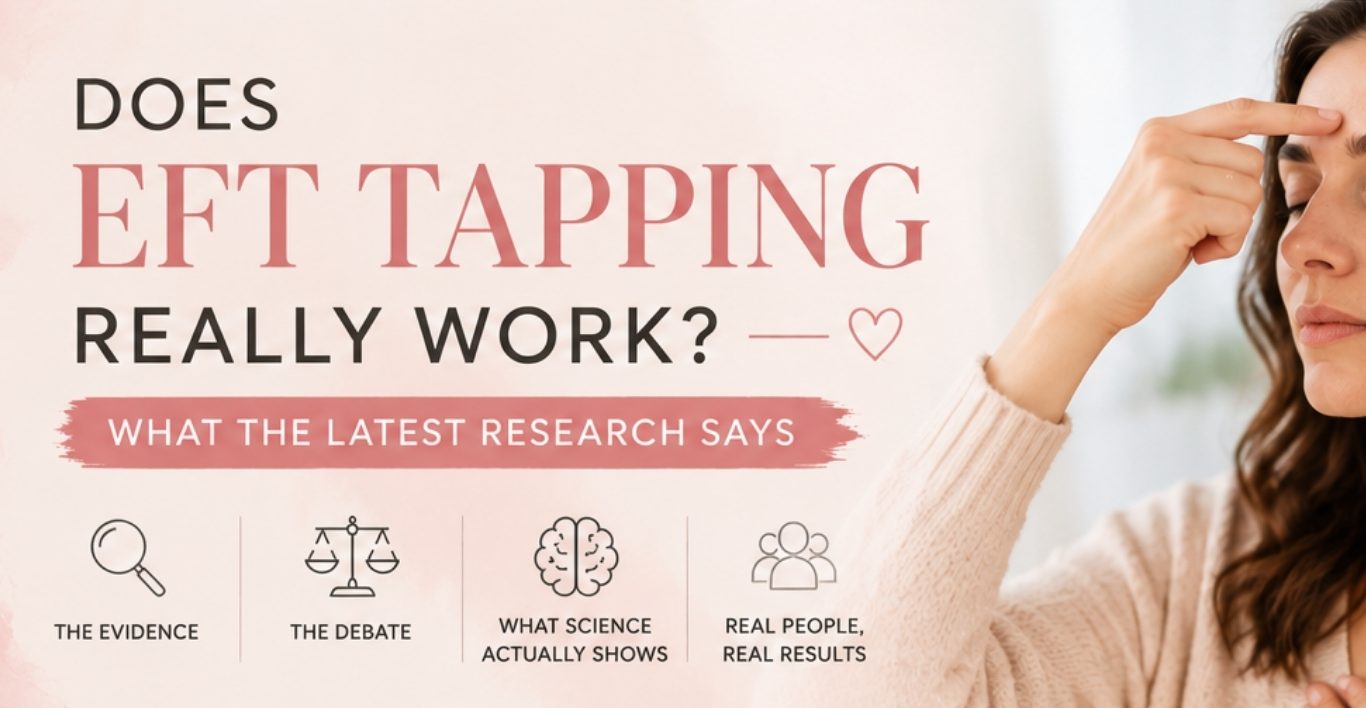
Few mental health techniques generate as much debate as Emotional Freedom Techniques (EFT), commonly known as “tapping.”
Supporters describe it as a breakthrough approach for stress, anxiety, trauma, and emotional regulation. Critics argue it belongs in the category of pseudoscience.
Yet despite years of skepticism, EFT continues to grow in popularity — and researchers are still studying it.
So what does the actual evidence say in 2026?
What Is EFT Tapping?
EFT combines elements of cognitive therapy, exposure therapy, mindfulness, and physical tapping on specific points of the body.
During a session, individuals focus on a stressful thought, memory, or emotional issue while tapping on acupuncture-inspired points such as the forehead, side of the eye, collarbone, and hands.
The practice was originally rooted in the idea that disturbances in the body’s “energy system” contribute to emotional distress.
That explanation remains controversial.
However, many modern practitioners now frame EFT less as “energy healing” and more as a nervous-system regulation technique.
Why Researchers Became Interested
For years, EFT was largely dismissed by mainstream psychology.
But over time, some studies began reporting measurable physiological and psychological changes associated with tapping interventions.
Researchers have explored EFT’s effects on:
- anxiety
- PTSD symptoms
- stress hormones
- emotional regulation
- phobias
- burnout
One of the most frequently discussed findings involves cortisol, a hormone closely linked to the body’s stress response.
Several studies have suggested that EFT sessions may reduce cortisol levels more significantly than standard relaxation approaches.
Supporters argue these findings suggest tapping may influence the body’s stress-regulation systems in ways that deserve further investigation.
What the Critics Say
Despite growing interest, skepticism remains strong.
Critics point out several important concerns:
- many studies involve small sample sizes
- some research lacks rigorous controls
- publication bias may influence positive findings
- evidence quality remains inconsistent
Perhaps the biggest criticism involves mechanism.
Scientists still do not have clear evidence supporting the existence of the “energy meridians” often referenced in traditional EFT explanations.
As a result, many psychologists argue that EFT’s benefits may come from familiar therapeutic ingredients already known to help people:
- focused attention
- breathing regulation
- mindfulness
- exposure to emotional triggers
- calming repetitive movement
In other words, some experts believe tapping works not because of invisible energy systems, but because it combines several psychologically soothing practices into a structured ritual.
Why Public Interest Keeps Growing Anyway
Even with ongoing debate, EFT continues gaining attention online and in wellness communities.
Part of the reason may be accessibility.
Unlike some forms of therapy, tapping exercises can be practiced almost anywhere. Social media platforms are now filled with short guided tapping videos focused on:
- anxiety relief
- emotional overwhelm
- sleep
- self-worth
- burnout
At the same time, public interest in body-based healing approaches has exploded. Discussions around trauma, nervous-system dysregulation, and somatic therapy have made people more open to techniques that involve both mind and body.
For many users, the appeal is practical rather than ideological:
if it helps them feel calmer, they are willing to try it.
The Bigger Picture
The debate around EFT reflects a larger shift happening in mental health care.
Modern psychology is increasingly exploring how emotional experiences affect the nervous system, stress physiology, and bodily regulation.
That does not automatically validate every claim made within energy psychology. But it does create space for deeper research into why certain body-centered practices appear helpful for some individuals.
In the years ahead, the future of EFT may depend less on proving ancient energy theories and more on demonstrating measurable clinical outcomes through rigorous science.
For now, the conversation remains open — and increasingly difficult to ignore.
Sources
- Frontiers in Psychology — EFT and physiological markers
- Association for Comprehensive Energy Psychology Research Database
- American Psychological Association discussions on somatic therapy
- NCCIH research on complementary mental health interventions