By TLC Wellness
Have you ever noticed that after a stressful day, your body seems to speak louder than your thoughts?
Maybe your shoulders ache.
Your stomach feels unsettled.
You wake up in the middle of the night replaying conversations.
Or perhaps you’re physically exhausted, yet your mind refuses to slow down.
For many years, we thought of stress as something that happened primarily in the mind. But modern research tells a more complete story.
Stress isn’t just something we think.
It’s something we experience with our entire body.
The Mind and Body Were Never Meant to Be Separate
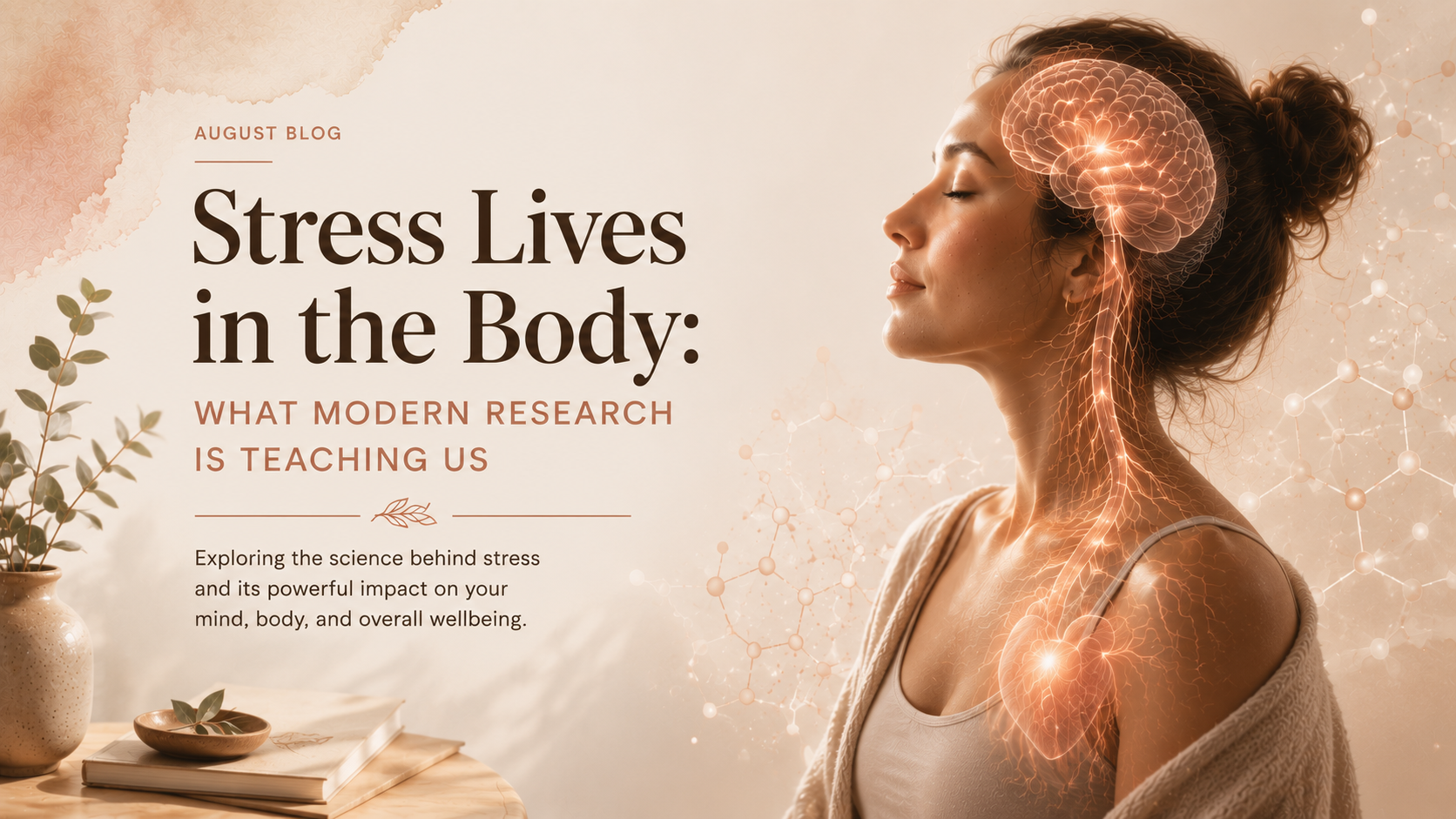
When we experience stress, the brain immediately communicates with the rest of the body.
Hormones like cortisol and adrenaline prepare us to respond by increasing alertness, raising heart rate, and directing energy toward survival.
This response is incredibly helpful during short-term challenges.
But when stress becomes chronic, the body doesn’t always return to its baseline as quickly as we’d like.
Researchers continue studying how prolonged stress may influence sleep, immune function, digestion, memory, emotional regulation, and overall wellbeing. While everyone’s experience is different, one message has become increasingly clear:
The mind and body are deeply interconnected.
Your Body Keeps the Score—In Everyday Ways
You don’t need to experience a major traumatic event for stress to affect your body.
Everyday pressures can accumulate over time.
You might notice:
- Tight shoulders or neck pain
- Frequent headaches
- Digestive discomfort
- Shallow breathing
- Jaw clenching
- Difficulty concentrating
- Fatigue that rest doesn’t fully relieve
- Feeling emotionally reactive or easily overwhelmed
These experiences don’t automatically mean stress is the cause, but they can be gentle reminders to check in with yourself. If symptoms are persistent or concerning, it’s important to consult a qualified healthcare professional.
Our bodies often communicate through sensation long before we consciously recognize we’re overwhelmed.
Why Awareness Matters
Many of us have learned to ignore the body’s signals.
We push through exhaustion.
We normalize tension.
We wear busyness like a badge of honor.
Eventually, we stop noticing how much energy it takes just to keep going.
Awareness isn’t about becoming hyper-focused on every sensation.
It’s about creating space to ask:
“What might my body be trying to tell me today?”
That simple question shifts us from judgment to curiosity.
The Rise of Body-Centered Healing
As researchers continue exploring the connection between stress and physical wellbeing, interest has grown in practices that support both emotional and physiological regulation.
These include:
- Mindfulness meditation
- Breathwork
- Gentle movement practices
- Yoga
- Somatic therapies
- Emotional Freedom Techniques (EFT)
- Other approaches within the field of energy psychology
Each has its own philosophy and level of scientific support. Some are backed by decades of research, while others are still being actively studied.
Rather than replacing conventional mental healthcare, many people use these practices as complementary tools to support emotional wellbeing.
The growing interest reflects a broader understanding that healing often involves more than changing our thoughts alone.
Small Daily Practices Can Make a Difference
Supporting your nervous system doesn’t have to involve dramatic lifestyle changes.
Often, it’s the small, consistent habits that create meaningful change over time.
You might try:
- Taking three slow breaths before opening your email
- Stretching after long periods of sitting
- Spending a few minutes outdoors each day
- Limiting screen time before bed
- Practicing gratitude or journaling
- Checking in with your body throughout the day
These simple moments help remind the body that not every moment requires high alert.
Healing Begins with Listening
One of the most compassionate things we can do is stop asking,
“Why am I like this?”
and begin asking,
“What is my body communicating?”
Stress isn’t a personal failure.
It’s a human experience.
When we listen with curiosity instead of criticism, we create opportunities for greater resilience, self-awareness, and wellbeing.
Pause & Practice
Take a slow breath.
Now gently scan your body from head to toe.
Without trying to fix anything, notice:
- Where do you feel the most tension?
- Where do you feel the most ease?
- What changes when you simply bring your attention to your body?
Sometimes awareness itself is the first act of care.
Reflection Journal
Today’s question:
How does stress usually show up in your body before you recognize it in your mind?
There are no right or wrong answers.
The goal is simply to become more familiar with your own patterns.
Monthly Affirmation
“I choose to listen to my body with curiosity instead of criticism. Every small moment of awareness is a step toward healing.”
Continue the Conversation
Healing is a journey best shared with others.
If you’re interested in learning more about nervous-system regulation, emotional wellbeing, somatic practices, and the evolving field of energy psychology, we’d love to welcome you into the TLC Wellness community.
Inside our Skool community, you’ll find:
- Weekly discussions on mind-body wellness
- Practical tools for emotional regulation
- Educational resources grounded in current research
- A supportive space to learn, reflect, and grow
Join us here:
https://www.skool.com/tlc-wellness-5108
We’re glad you’re here.
References
- American Psychological Association. Resources on stress, resilience, and mind-body health.
- National Center for Complementary and Integrative Health. Mind and body practices.
- McEwen, B. S. Research on stress and allostatic load.
- Frontiers in Psychology. Research on Emotional Freedom Techniques (EFT) and stress regulation.