By TLC Wellness
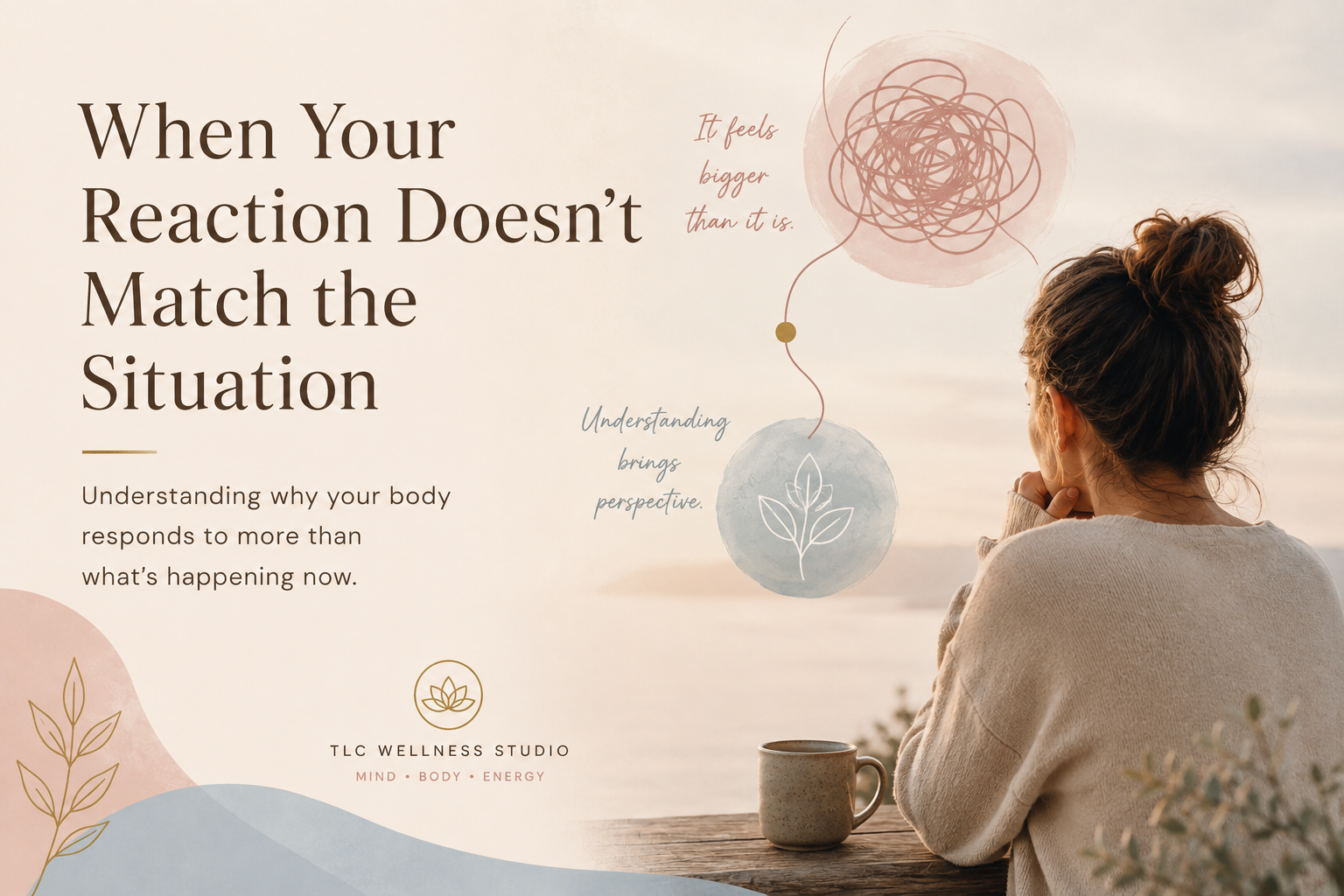
Sometimes the situation is small.
But your reaction isn’t.
A delayed text.
A critical comment.
Someone’s change in tone.
A disagreement.
A person walking away.
Your mind may know that the situation isn’t catastrophic.
But your body reacts as if something much bigger is happening.
Your heart races.
Your muscles tighten.
Your thoughts speed up.
You feel angry, frightened, ashamed, or desperate to fix the situation.
So you ask yourself:
“Why am I reacting like this?”
A better question may be:
“What is my system responding to?”
The difference between the event and the response
Our emotional responses don’t happen in isolation.
Stress activates interacting physiological systems, including the autonomic nervous system and the hypothalamic-pituitary-adrenal axis. These systems help the body respond to perceived threats and demands.
In other words, your body doesn’t wait for you to construct a perfectly rational explanation before responding.
It responds to what it perceives.
And perception is influenced by experience.
Your present situation may touch an older pattern
Imagine someone receives a short email from their supervisor:
“Can we talk tomorrow?”
That’s all it says.
One person reads it and thinks:
“Sure.”
Another person immediately thinks:
“I did something wrong.”
Their stomach drops.
They start reviewing every mistake they’ve made.
They can’t concentrate.
They may spend the evening preparing for criticism.
The email hasn’t changed.
The internal response has.
Why?
Because the brain doesn’t evaluate every experience in a vacuum.
Previous experiences, expectations, associations, and learned threat responses can influence how we interpret what is happening now. Research into trauma and fear conditioning has explored how reminders or cues can reactivate physiological and emotional responses.
This doesn’t mean your reaction is “all in your head”
This phrase is particularly unhelpful.
The reaction can be very physical.
Your heart rate can change.
Your breathing can change.
Your muscles can tense.
Your attention can narrow.
Your digestive system can respond.
Your behavior can change.
Stress is a whole-body process.
Research on allostatic load has increasingly examined how repeated or prolonged activation of stress-response systems can contribute to cumulative physiological burden across multiple systems.
That doesn’t mean every symptom is caused by stress.
And it doesn’t mean stress explains every health problem.
But it does remind us that mind and body aren’t separate compartments.
So what can you do with a disproportionate reaction?
First, don’t immediately try to argue yourself out of it.
Instead, become curious.
Ask:
What happened?
What did I immediately assume it meant?
What did I feel in my body?
What did I want to do?
What am I afraid will happen?
This gives you a little distance between the event and your automatic response.
And that space matters.
The reaction may be real without the interpretation being accurate
This distinction is important.
Your emotional response is real.
But the story your mind creates around that response may not necessarily be accurate.
You can feel rejected without actually being rejected.
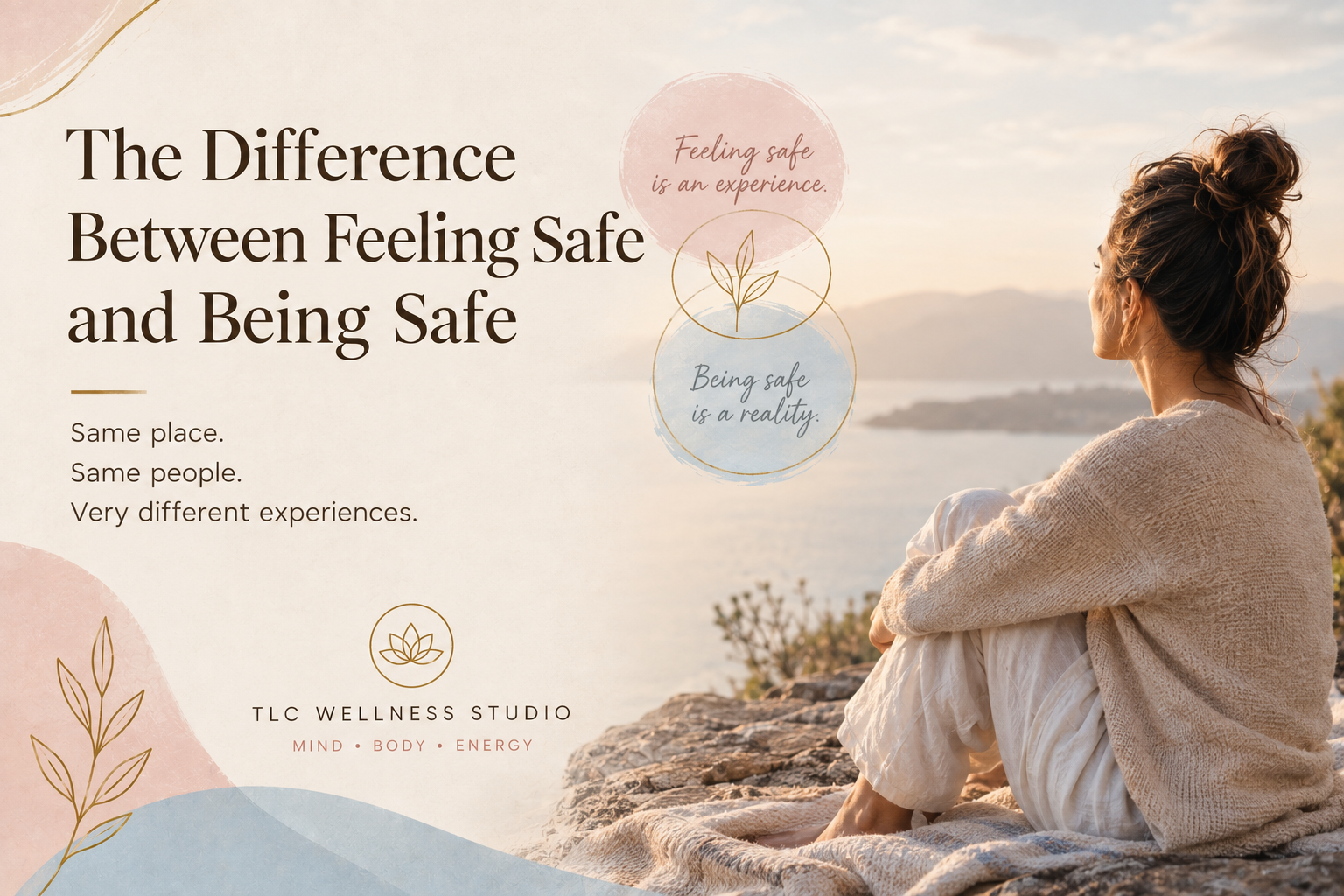
You can feel unsafe without being in immediate danger.
You can feel criticized without someone actually criticizing you.
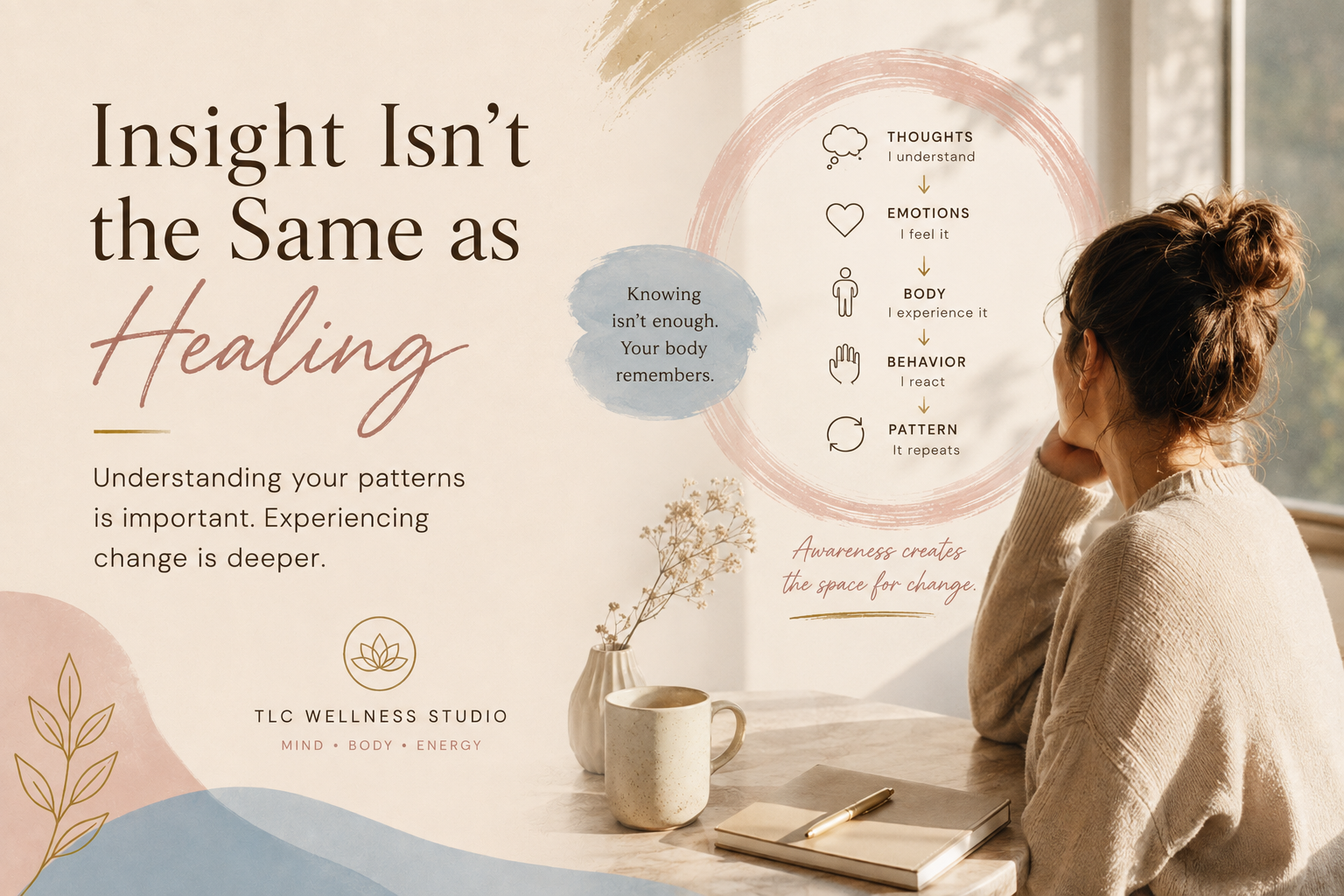
Learning to separate sensation, emotion, interpretation, and circumstance can help us understand our reactions more clearly.
Instead of fighting the reaction, study it
A strong reaction isn’t necessarily something you need to eliminate.
It may be something you need to understand.
What is it protecting?
What does it expect?
What does it remind you of?
What does it need?
Those questions can lead to much deeper work than simply telling yourself to “calm down.”
A simple reflection
The next time your reaction feels bigger than the situation, write down:
What happened:
What I immediately thought it meant:
What I felt emotionally:
What I noticed physically:
What I wanted to do:
Don’t judge the answers.
Just observe them.
Understanding often begins with separating what happened from what your system predicted would happen.
Continue the Conversation
We explore these kinds of mind-body patterns inside the TLC Wellness community.
Join us on Skool:
https://www.skool.com/tlc-wellness-5108
This article is for educational purposes and is not a substitute for individualized mental health care.